This is Baxter. He was a random dog at a dog park that we visited last weekend, and he was fascinated by my Yashica TLR camera. Obviously a diva dog.
This photo was taken from the first roll of film that I’ve ever pushed. I exposed the Kodak Portra 400 film as though it was rated at ISO 1600. Then, I told the developer to push it two stops (400 to 800 to 1600), which means soaking the negatives in developer for a longer time. The overall quality of the photo is not bad for the Yashica TLR, which isn’t a professional-level camera and tends to produce lower contrast, softer images.
Some other photos on the same roll came out muddy and grainy, however. The difference? Maybe it’s that Baxter’s photos were taken in daylight with a shutter speed of 1/1000th, but the others were taken indoors with a longer shutter speed of 1/30th. I used the same light meter for all of the photos so I know they were exposed correctly. I can’t show the other examples without permission because they were of kids.
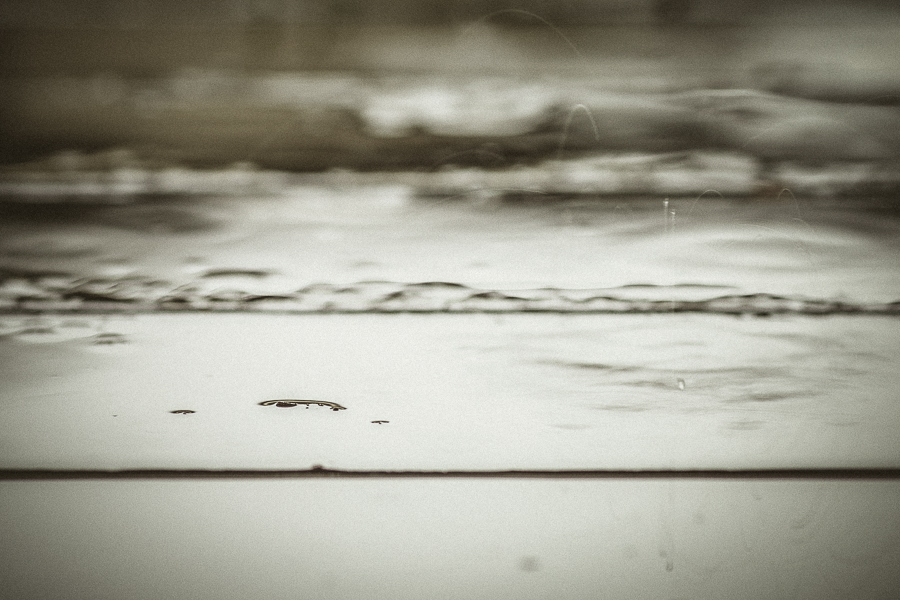
I also tried pushing a black-and-white Kodak Tri-X 400 film to ISO 1600. The images worked out incredibly well for what were effectively ISO 1600 images, as the example below shows. There was possibly more contrast than usual giving was more areas of pure black and areas of pure white in the photo.
The newest version of Tri-X, in particular, is a very forgiving film, meaning that you get good results even if you overexpose or underexpose it. It also has a nice grain texture, and certain colors are translated into a higher brightness than others, creating a pleasing balance of tones. This is why Tri-X has been the black-and-white standard since 1940.

So why push film? When doing street photography we usually need shutter speeds of 1/250 or faster to stop the motion of people walking. That means either 1/250, 1/500, or 1/1000 on a film camera. We also typically need apertures that will give us a decent depth of field so, (a) We can pre-focus the lens to the distance at which we expect to be capturing our subject, and then shoot without actually focusing at that time, and (b) See some background context in the image. We’re typically working at f/8, f/11, or f/16. The third variable that determines exposure is ISO. To get a combination of shutter speed and aperture that will give a correctly exposed image, we need a high ISO film. By using 400 ISO film and also pushing it two f-stops we can achieve the kind of ISO that will get us there.
Having said that, comparing the pushed film with photos taken with the recommended ISO, I prefer the normal film. Pushed film has less details in the shadows and it has more grain. You can see more comparisons in this gallery.
Read more